

PhD Linguistics


学历文凭
Ph.D.

专业院系
语言文学

开学时间

课程时长

课程学费

国际学生入学条件
Applicants are expected to hold a minimum of an an upper second-class (2:1) UK degree and an MA in a topic relevant to linguistics or applied linguistics. In exceptional cases, students with a good first degree will be considered without the need for an MA.
展开
IDP—雅思考试联合主办方

雅思考试总分
6.5
了解更多
- 雅思总分:6.5
- 托福网考总分:88
- 托福笔试总分:160
- 其他语言考试:Pearson Academic English (PTE): 67 overall, 64 in each component. Cambridge Certificate of Advanced English (CAE) / Proficiency (CPE): 176 overall, 169 in each component.
CRICOS代码:
申请截止日期:请 与IDP联系 以获取详细信息。
课程简介
It normally takes three to four years of full-time study or six to eight years of part-time study to complete our PhD in Linguistics. You’ll take a confirmation viva at 12-15 months (or 24-30 months part-time) and then be assessed by a thesis and viva examination. You’ll be assigned two supervisors, who you’ll meet with monthly to discuss your progress. Your supervisors will guide you through your PhD and will give you feedback and advice on your work. As a doctoral student, you’ll receive a structured training programme covering the practical aspects of being a researcher, including grant-writing, publishing in journals, and applying for academic jobs. • We look at the grammatical structure of languages and the ways in which language-related research can have practical applications, and the consequences of linguistic diversity. Topics include multiculturalism and mobility, multilingual practices in business and educational contexts, intercultural pragmatics, second and foreign language learning and teaching lexicography and corpus linguistics. • Our research reflects the evolving nature of the discipline, encompassing a critical understanding of technology-enabled language mediation as well as quality, ethical and social dimensions of a fast-evolving language services industry. • Since our formation in 1982, we have been awarded prestigious research funding that has allowed us to contribute to the theoretical advancement of translation and interpreting studies, whilst achieving real-world applicability by studying the responsible integration of human and technology-enhanced approaches, and novel modalities of audiovisual translation. • We’re part of TECHNE, an Arts and Humanities Research Council (AHRC)-funded doctoral training partnership, which provides access to comprehensive academic and professional training programmes, as well as the possibility of funding for your studies. • We’re also home to the Surrey Morphology Group, a linguistics research centre that focuses on theoretical morphology, morphological interfaces, linguistic typology, and documenting and describing languages.
展开
相关申请

预科
奖学金
实习机会
在校学习

跨境学习
校园授课-线上开始
在线/远程学习
学校排名
世界排名
251
数据源:泰晤士高等教育世界大学排名

关于萨里大学
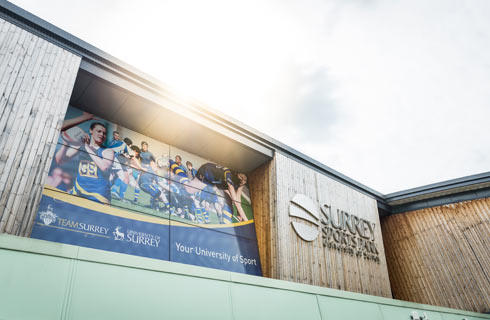
萨里大学拥有一个由15500多名学生组成的全球学生群体,其中超过五分之一的学生来自英国以外的国家和地区。萨里不仅仅是一所大学,它是一个由不同思想和人员组成的全球社区,致力于改变人生的教育和研究。 萨里大学的毕业生就业率是英国最高的大学之一。 萨里大学荣获 2022 年最佳大学职业和就业能力服务奖(全国本科生就业能力奖)该大学以世界一流的研究和创新为动力,通过与企业、政府和社区的敏捷合作对社会产生积极影响并塑造数字经济的未来。 在大学学习课程的学生将为学术界和工业界的众多职业道路做好准备。萨里大学位于繁华的吉尔福德小镇。 吉尔福德距离伦敦市中心仅 35 分钟火车车程。 该大学风景如画的校园拥有一系列出色的学习设施,包括每个学院都拥有最先进的实验室和模拟设备。 大学提供全面的学生服务,包括为国际学生提供的专门支持服务。 萨里拥有各种现代化的住宿设施,国际学生的舒适度和整体体验是萨里大学的首要任务。萨里大学的三个学部提供许多本科和研究生课程,所有课程都具有灵活性,因此学生可以根据专业兴趣和个人目标打造他们个性化的学位。 每个萨里大学的学生在整个学习过程中都受益于高效的职业支持和指导,此外还有大量在核心学位途径之外发展专业技能的机会。
本校相关课程
兽医生物科学理学士(荣誉学位)

学历文凭
Bachelor Degree with Honours
下一个开始日期
课程费用总额
国际旅游管理理学学士(荣誉学位)

学历文凭
Bachelor Degree with Honours
下一个开始日期
课程费用总额
社会学理学士学位(荣誉学位)-专业培训

学历文凭
Bachelor Degree with Honours
下一个开始日期
课程费用总额
社会学理学学士(荣誉学位)

学历文凭
Bachelor Degree with Honours
下一个开始日期
课程费用总额
心理学理学士(荣誉学位)

学历文凭
Bachelor Degree with Honours
下一个开始日期
课程费用总额
国际关系理学士学位(荣誉学位)
学历文凭
Bachelor Degree with Honours
下一个开始日期
课程费用总额
其他相关课程
中学11年级和12年级

马特·克里斯蒂学院
泰晤士高等教育世界大学排名:

学历文凭
Secondary School
下一个开始日期
课程费用总额
应用语言学硕士-应用语言学
昆士兰大学
泰晤士高等教育世界大学排名:80

学历文凭
Masters Degree (Coursework)
下一个开始日期
课程费用总额
国际研究学士-中文
昆士兰大学
泰晤士高等教育世界大学排名:80
学历文凭
Bachelor Degree
下一个开始日期
课程费用总额
脑与精神科学研究生文凭
悉尼大学
泰晤士高等教育世界大学排名:54
学历文凭
Graduate Diploma
下一个开始日期
课程费用总额
脑与精神科学研究生证书
悉尼大学
泰晤士高等教育世界大学排名:54
学历文凭
Graduate Certificate
下一个开始日期
课程费用总额
脑与精神科学硕士
悉尼大学
泰晤士高等教育世界大学排名:54

学历文凭
Masters Degree (Coursework)
下一个开始日期
课程费用总额