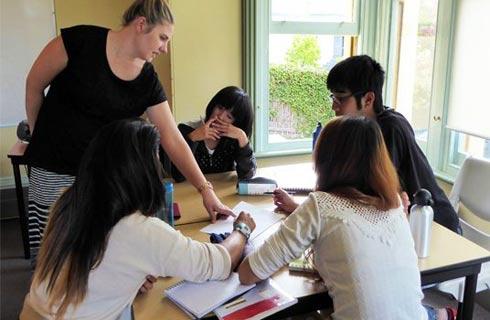
MA Media, Gender and Social Justice

莱斯特大学

QS排名:326
学历文凭
Masters Degree (Taught)
国际学生入学条件
A first or good second class degree (or international equivalent) in a relevant social sciences or humanities subject area
OR be able to demonstrate equivalent professional or vocational skills based on their work experiences. We will recognise a range of relevant experiences from both voluntary and compensated work within grassroots, public, private, or NGO sectors internationally, but evidence of this experience must be provided. If you do not have an undergraduate degree, you may be asked to complete an assessment, such as an essay, to demonstrate your readiness for postgraduate study. Clear guidance will be provided on assessment criteria.
IELTS 6.5 or equivalent.
TOEFL iBT - 90
展开
IDP—雅思考试联合主办方

雅思考试总分
6.5
了解更多
- 雅思总分:6.5
- 托福网考总分:90
- 托福笔试总分:160
- 其他语言考试:Pearson Test of English (PTE) - 61
CRICOS代码:
申请截止日期:请 与IDP联系 以获取详细信息。
课程简介
As hashtag campaigns like #HeForShe indicate, the relationship between social inclusion, access to and participation in public life, and the tools and skills required to address inequalities in our major institutions are tightly tied to media and communication. Increasingly there is a need to not only examine how media represent and contribute to social inequalities, but also actively develop practical media tools for engaging in direct action leading to social change. On the MA in Media, Gender, and Social Justice you will gain a comprehensive view of the theories, concepts, and approaches related to the use of media and communication for addressing inequalities and engaging in social justice work. This course is unique in the UK in that it provides an interdisciplinary, critical, and practical focus in the area of media, gender and social justice. You will study the role of media and communication technology in shaping inequalities on a global level and in a range of specific sites and organisations. You will examine the ways in which media and communication play a key role in framing, representing, and extending inequalities related to gender as well as other identity markers. You will also investigate the conceptual and practical tools media and communication research can provide for making interventions into these inequalities, through grounded case studies as well as engagement with real-world problems, groups, and questions.
展开 相关申请

预科
奖学金
实习机会
在校学习

跨境学习
校园授课-线上开始
在线/远程学习
学校排名
世界排名
167
数据源:泰晤士高等教育世界大学排名

关于莱斯特大学

莱斯特大学以世界一流的研究为动力,提供涵盖科学、人文、法律、医学、艺术和商业的教育。教职员工和学生一起合作去创造、分享和应用知识来改变世界。莱斯特大学位于英国最多元文化城市是一所世界领先、多元化和包容的大学。莱斯特大学的学生是不受学术界限限制的革新公民。他们对研究采取创新方法,将科学和艺术结合起来,为最复杂问题寻找解决方案。无论是在个人还是专业方面,学生将被赋予创造和发展的空间。课程由具有创新精神的教职员工教授,他们通过科研改变世界。莱斯特大学的研究开拓了新领域,并产生全球影响,涉及许多不同的领域并在现实生活中得到应用。学生们将接触到最新的知识和教学,并从这些研究中获得信息,同时他们被鼓励贡献自己的观点。莱斯特市夜生活丰富,有适合各种喜好的酒吧和俱乐部。每年2月英国历史最悠久的喜剧节都会在莱斯特市内举办数百场演出和活动。莱斯特市还会举办来自多种文化的节日,例如印度以外最大的排灯节庆祝活动和英国第二大的加勒比狂欢节。莱斯特市是一个多元文化城市和体育城市,拥有莱斯特老虎队、莱斯特郡板球俱乐部、莱斯特骑士队(篮球)和2016年英超冠军球队--莱斯特城。莱斯特市对学生友好且经济实惠,城市之外是美丽的乡村。莱斯特市提供涉及30个学科的超过150个不同的学位。大多数课程包括在其他国家/地区进修一年的选项,可选国家/地区有27个。莱斯特大学也是英国前25名的大学,在93个国家/地区的1500多所大学中排名世界第170位*。*《泰晤士高等教育》(THE)2021年世界大学排名。
本校相关课程
学历文凭
Masters Degree (Taught)
学历文凭
Masters Degree (Taught)
学历文凭
Masters Degree (Research)
学历文凭
Masters Degree (Taught)
学历文凭
Masters Degree (Taught)