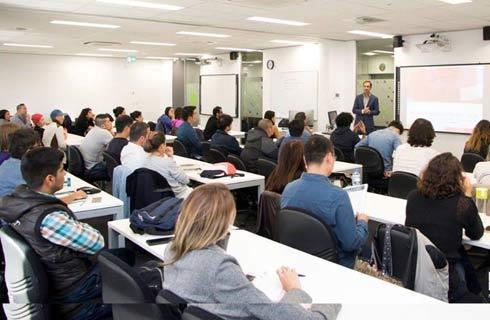
MSc Business Analytics and Management

东安格利亚大学

QS排名:
学历文凭
Masters Degree (Taught)
国际学生入学条件
Students need to have UK Bachelors degree - 2.2 or equivalent in A social science degree (eg. economics, psychology, business, management, marketing, logistics and supply chain management or law), or a science discipline degree (eg. maths, physics, or computer science). You should feel comfortable with data handling and statistics.
展开
IDP—雅思考试联合主办方

雅思考试总分
6.0
了解更多
- 雅思总分:6
- 托福网考总分:79
- 托福笔试总分:160
- 其他语言考试:Pearson Academic English - 64 overall with minimum of 59 in only two components and 64 in the others
CRICOS代码:
申请截止日期:请 与IDP联系 以获取详细信息。
课程简介
The dynamic MSc Business Analytics and Management course will give you the skills and knowledge to manage the whole business analytics process, from data to decisions. You’ll explore technical and human resources and learn how to navigate and manage legal, regulatory and ethical challenges. You’ll be prepared for a wide range of roles in the new data economy, from management and leadership roles in major corporates, to consulting and contracting roles for organisations of all sizes, including entrepreneurship and new firm formation. You’ll also have the option to do an industry placement, deliver a business sponsored project, or develop a business plan if you wish to start your own business. Our course focuses on the management of the whole business analytics process, from the identification, integration and ‘cleansing’ of data, through various forms of data analysis, to the visualisation and presentation of results and their incorporation into decision-making. Throughout these stages, there is a strong focus on both governance and ethics, as well as the management of the underpinning resources and infrastructure. Throughout the course, the focus is on practical application of skills. Assessment is mainly based around business analytics projects that enable you to test your knowledge against authentic business problems, using real data and deploying cutting edge techniques. While a solid understanding of the application of data science techniques forms a major strand of the course, you’ll develop a much wider critical understanding of data management, including the whole data life cycle – from creation and storage, through integration and manipulation, to deletion – and the use (and misuse) of data in decision-making.
展开 相关申请

预科

奖学金
实习机会
在校学习
跨境学习
校园授课-线上开始
在线/远程学习
学校排名
世界排名
190
数据源:泰晤士高等教育世界大学排名

关于东安格利亚大学

东安格利亚大学(UEA)是一所位于英国诺里奇市的校园式研究型大学。根据2025年《完全大学指南》 排名,UEA位列英国第25名,为来自世界各地的17500多名学生提供卓越的学术、社交和文化设施。UEA在学术卓越性和学生体验之间实现了完美平衡。校园坐落在风景如画的320英亩公园绿地中,旨在为学生提供一站式服务。从商店、餐厅、酒吧、牙医诊所、托儿所、诊所和24小时开放的图书馆,到国际知名的音乐场所和体育公园,所有设施都近在咫尺,方便学生入住UEA种类繁多的校内宿舍。诺里奇市诺里奇市以其历史悠久的大教堂、12世纪的诺曼城堡和保存完好的古城墙而闻名。从伦敦乘火车不到2小时即可到达诺里奇,它是英国最宜居的城市之一(2024年《泰晤士报》 )。这里拥有绝佳的购物场所、精彩的夜生活和充满活力的音乐氛围。诺里奇不仅被美丽的英国乡村环绕,而且距离美丽的诺福克海岸也只有很短的车程。它还以其丰富的文化而闻名,是英格兰第一个被联合国教科文组织授予''文学之都''称号的城市。诺里奇的大学生活国际学生是UEA学生生活中不可或缺的一部分。大学热情欢迎国际学生,并在学习期间及毕业后持续提供支持。UEA 的学生可以参加丰富多彩的活动,例如去电影院观看最新上映的电影、在当地咖啡馆玩桌游、租船出海、体验密室逃脱、保龄球和冬季运动等等。不仅如此,诺里奇的生活成本通常比其他大学城更低,租金比伦敦低 53.7%,餐饮价格比伦敦低 21.4%。
本校相关课程
学历文凭
Masters Degree (Taught)
学历文凭
Bachelor Degree with Honours
学历文凭
Bachelor Degree with Honours
学历文凭
Bachelor Degree with Honours
学历文凭
Bachelor Degree with Honours
学历文凭
Bachelor Degree with Honours