
Master of Education in Education for Change - Environmental and Sustainability Education (Course)


学历文凭
Masters Degree

专业院系
消费者服务与宣传

开学时间

课程时长

课程学费

国际学生入学条件
Applicants for admission must be graduates of a recognized university, college, or institute as well as show evidence of scholarly achievement. Except where otherwise stated in the Admission Requirements of a particular program, degree students must have a four year bachelor's degree or its equivalent with at least second class standing (B) based on their last 20 half courses or equivalent.An applicant holding a degree other than one in the discipline area to which admission is sought will be considered on the basis of courses taken and academic standing. A Qualifying Year at the undergraduate level may be required to meet the admission standards. Courses taken as part of a Qualifying Year can not be used as credit towards a graduate degree.The candidate must normally hold a four-year degree in the disciplines of Engineering or Natural Science (including, but not restricted to, Biology, Chemistry, Geology, Physics), with at least a 70% average, or equivalent Our minimum admission requirement for international applicants is 75% or 3.0 on a 4 point Canadian scale, with an accredited university degree equivalent to a Lakehead University 4 year degree.
展开
IDP—雅思考试联合主办方

雅思考试总分
6.0
了解更多
- 雅思总分:6
- 托福网考总分:100
- 托福笔试总分:600
- 其他语言考试:Canadian Academic English Language Assessment (CAEL) with a minimum score of 80
CRICOS代码:
申请截止日期:请 与IDP联系 以获取详细信息。
课程简介
The Faculty of Education at Lakehead University offers a Master of Education program designed to meet your professional and academic goals and interests. Our Master of Education (MEd) program provides you with a unique learning opportunity, which addresses the current landscape of both education and research. Our program consists of two distinct fields of study, Educational Studies and Education for Change. Our Education for Change field provides an innovative learning experience that allows you to complete your Master's of Education with one of the following specializations: Environmental and Sustainability Education (ESE), Indigenous Education (IE), Social Justice Education (SJE), One of these may also be combined with the Gender and Women's Studies specialization.Our Educational Studies field offers you the opportunity to earn your Master's of Education while studying educational research, theory, and practice in a variety of educational contexts, as well as the chance to specialize in Gerontology or Gender and Women's Studies. Our MEd program is both flexible and responsive to the needs of education professionals. You can pursue either field of study via a Thesis, Portfolio, or Course route. Both fields of study accommodate a wide range of interests and are available for full-time or flex-time studies. We are also the home of two Canada Research Chairs (in Environmental Education, Arts Integrated Research), the Centre for Place and Sustainability Studies, the Multi-Data Convergence Laboratory, and the Canadian Journal of Environmental Education.ESE focuses on theory, research, and practices that analyze the cultural and ecological politics of sustainability and foster mutually flourishing relationships between humanity and the natural world. It includes approaches such as climate change pedagogy, ecopedagogy, environmental justice education, food education, humane education, outdoor education, and place-based education.
展开
相关申请

预科
奖学金
实习机会
在校学习

跨境学习
校园授课-线上开始
在线/远程学习
关于湖首大学

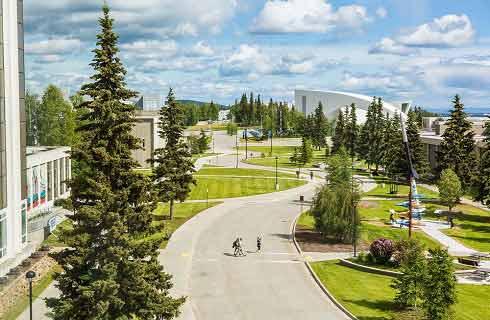
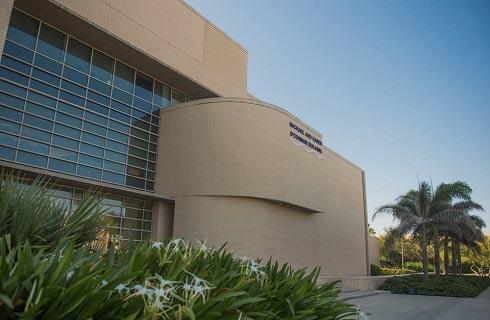
湖首大学拥有超过 85 个本科和研究生课程,为学生提供培育性、变革性、小型大学体验的最佳体验,以及卓越的研究和教学。该大学成立于50多年前,拥有一个包容的社区,大学庆祝所有学生的成功。来自90多个国家/地区的1800多名国际学生在湖首大学就读。实习、合作教育、实地考察和实习课程等体验式学习机会,让学生能够将课堂学习成果应用于实践。较小的师生比例使学生能够通过学术指导、实践学习和现代研究的创新组合进行学习。湖首大学被誉为全美最美校园之一(《赫芬顿邮报》),在安大略省桑德贝和奥里利亚设有两个校区。湖首大学位于安大略省巴里的创新型 STEM 中心将于 2026 年秋季开放,为学生提供新一代计算机科学与工程学习。两个校区均在风景秀丽的自然环境中为学生提供先进的设施、卓越的教学和研究、学生住宿、全面的学生支持以及丰富多彩的社交活动。在学生人数少于10000人的大学中,湖首大学在北美地区排名第一(泰晤士高等教育2025年全球影响力排名)。湖首大学是加拿大排名前三的研究型大学(Re$earch Infosource 2024),也是加拿大两所被评为''创新与经济繁荣大学''的大学之一,旨在表彰其在创新、技术转移和社区发展方面的成就。湖首大学的商学院获得AACSB国际认证,其工程学院是加拿大唯一一所四年制即可获得学位和文凭的学院,毕业生在业界备受追捧。
本校相关课程
学术英语课程

学历文凭
English Language
下一个开始日期
课程费用总额
社会工作硕士
学历文凭
Masters Degree
下一个开始日期
课程费用总额
化学与材料科学哲学博士

学历文凭
Ph.D.
下一个开始日期
课程费用总额
生物技术哲学博士

学历文凭
Ph.D.
下一个开始日期
课程费用总额
森林科学哲学博士

学历文凭
Ph.D.
下一个开始日期
课程费用总额
工商管理硕士

学历文凭
Masters Degree
下一个开始日期
课程费用总额
其他相关课程
Diploma in Early Learning and Child Care
红鹿理工学院
泰晤士高等教育世界大学排名:
学历文凭
Bachelor Degree
下一个开始日期
课程费用总额
可持续发展硕士(研究与合作)

布鲁克大学
泰晤士高等教育世界大学排名:
学历文凭
Masters Degree
下一个开始日期
课程费用总额
Certificate in Early Childhood Education (69 week) (Co-op)
斯坦伯格学院
泰晤士高等教育世界大学排名:

学历文凭
Bachelor Degree
下一个开始日期
课程费用总额
幼儿教育文凭(阿什顿比校区)
百年理工学院
泰晤士高等教育世界大学排名:

学历文凭
Bachelor Degree
下一个开始日期
课程费用总额
Bachelor of Science in Early Childhood and Childhood Education

佩斯大学
泰晤士高等教育世界大学排名:
学历文凭
Bachelor Degree
下一个开始日期
课程费用总额