

Doctor of Philosophy in Chemical Engineering- Sustainable Energy Systems


学历文凭
Ph.D.

专业院系
化学工程

开学时间

课程时长

课程学费

国际学生入学条件
Most applicants have satisfactorily completed the equivalent of the fundamental work required by an accredited curriculum in chemical engineering. Outstanding students with undergraduate majors in chemistry, materials science, microbiology, or physics are also encouraged to apply. For such students extra semester or summer term of residence is normally required.
Statement of purpose
Transcripts
3 letters of recommendation
Official TOEFL scores (if applicable)
Résumé
GRE scores are not required
TOEFL iBT - 77 (Writing 20; Listening 15; Reading 20; Speaking 22)
IELTS - 7.0 or higher
展开
IDP—雅思考试联合主办方

雅思考试总分
7.0
了解更多
- 雅思总分:7
- 托福网考总分:77
- 托福笔试总分:160
- 其他语言考试:NA
CRICOS代码:
申请截止日期:请 与IDP联系 以获取详细信息。
课程简介
Growth in world population and continual improvements in living standards in developing countries will increase demands for energy in the next 40 years, posing tremendous challenges for providing affordable energy.<br>Cornell University is committed to being a leader in the field of sustainable development. In addition to the Cornell Energy Systems Institute (CSEI), several Cornell Centers coordinate efforts in related research and education including the Cornell Center for a Sustainable Future and the Cornell Fuel Cell Institute. The Robert Frederick Smith School of Chemical and Biomolecular Engineering is a key part of those efforts. With a framework that includes physical, chemical, and biological energy transformations, transport of heat and mass in fluids and solids, materials for energy capture and storage, process analysis, design, and simulation, and full life cycle analysis of energy and mass flows, a chemical engineering education provides the ideal skill set for tackling a wide range of energy problems.<br>Degree candidates are expected to pursue study and research that will give them a deeper comprehension of the basic and applied sciences and will develop initiative, originality, and creative ability. The thesis or dissertation may involve either research or special projects in such subjects as design, economics, or mathematical analysis. There is no language requirement for students majoring in chemical engineering. The Smith School's Ph.D. in chemical engineering will prepare you for careers in academia and research. The program is completed in four to five years, and students typically receive full funding.
展开
相关申请

预科
奖学金

实习机会
在校学习
跨境学习
校园授课-线上开始
在线/远程学习
学校排名
世界排名
19
数据源:泰晤士高等教育世界大学排名

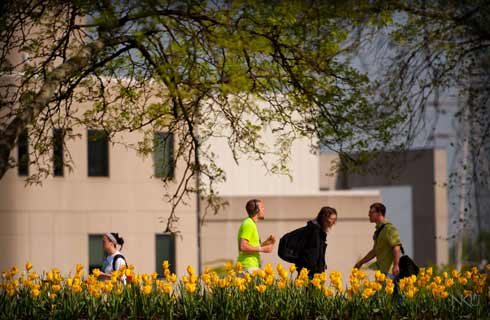
关于康奈尔大学

常青藤联盟中的“学术高压锅”是不是很吓人?其实,这个称号更多是源自大部分学子所表现出的“我要更出色”的学术态度。与其它常青藤盟校大而全的发展策略不同,其一直致力于做“最好的本科教育”。其下属7所学院,4所私立,3所公立。其中康奈尔大学(Cornell University)建筑学院与酒店管理学院提供了全美最好的相关专业。早在Erza Cornell 1860年创立康奈尔大学(Cornell University)时,“一所让所有人可以学习任何专业的大学”即成为了以后200年这所高等学府所遵循的教育理念。学校的招生政策不考虑学生支付能力,并且保证迎合每一名录取学生的经济需要。 学校给学生提供超过4000类的课程,想要出国的学生可以选择超过200多个交换项目。康奈尔大学的种植园是一片超过3000亩的树林,自然山径,溪流和峡谷,提供了散步,野餐或者冥想的空间。康奈尔大学有常青藤大学所拥有的严谨学术,州立大学所具备的大规模和多样性,这所学校愿意偏离传统的常青藤模式,敢于创新的学生在这里将会得心应手舒适如归。
本校相关课程
国际学生和学者英语-暑期课程
学历文凭
English
下一个开始日期
课程费用总额
法学博士
学历文凭
Ph.D.
下一个开始日期
课程费用总额
Bachelor of Arts in Italian Studies

学历文凭
Bachelor Degree
下一个开始日期
课程费用总额
Master of Engineering in Engineering Mechanics

学历文凭
Masters Degree
下一个开始日期
课程费用总额
Bachelor of Science in Earth and Atmospheric Sciences

学历文凭
Bachelor Degree
下一个开始日期
课程费用总额
Bachelor of Science in Science and Technology Studies

学历文凭
Bachelor Degree
下一个开始日期
课程费用总额
其他相关课程
Graduate Certificate in Engineering - Chemical and Biomolecular Engineering

马里兰大学帕克分校
泰晤士高等教育世界大学排名:
学历文凭
Graduate Certificate
下一个开始日期
课程费用总额
化学工程理学硕士
犹他大学
泰晤士高等教育世界大学排名:246

学历文凭
Masters Degree
下一个开始日期
课程费用总额
Master of Science in Chemical and Biochemical Engineering
罗格斯大学新布朗斯维克分校
泰晤士高等教育世界大学排名:

学历文凭
Masters Degree
下一个开始日期
课程费用总额
Master of Science in Engineering in Chemical Engineering - Polymers and Complex Fluids
密歇根大学安娜堡分校
泰晤士高等教育世界大学排名:
学历文凭
Masters Degree
下一个开始日期
课程费用总额
化学工程博士学位

萨斯喀彻温大学
泰晤士高等教育世界大学排名:

学历文凭
Ph.D.
下一个开始日期
课程费用总额
Doctor of Philosophy in Chemical Engineering
亚利桑那大学
泰晤士高等教育世界大学排名:138
学历文凭
Ph.D.
下一个开始日期
课程费用总额